




Nothing reveals the reality of life on the road for an EV driver quite like experiencing it firsthand. As providers of driver support services to some of the UK’s leading charge point operators (CPOs), we need true insight into what drivers get from a driver support service so we can continue to deliver the exceptional service we’re recognised for.
With this in mind, we took to the road in an EV, to travel round various public charging networks and see what the driver support lines had to offer. The results were eye-opening.
From being directed to an alternative charger over 300 miles away, being quoted charging prices in the wrong currency, to an AI agent that simply could not understand a caller's name, we saw the damage that treating driver support as an afterthought is doing to the brand reputations of some charge point operators.
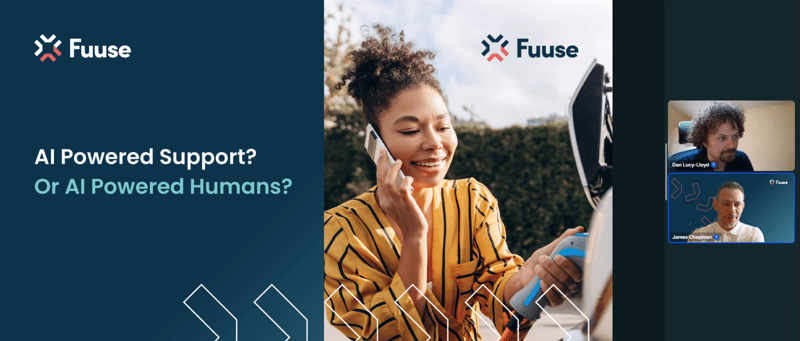
And this was a small, controlled test. If that is what "support" looks like, the damage at scale is hard to overstate. So, what does ‘good’ driver support look like? We recently hosted a webinar to explore exactly that, and the conversation surfaced some important truths about where the industry stands, and where it needs to go.
You can watch the webinar here.
Customer experience is the number one priority
The webinar opened with a live poll asking attendees (senior representatives of CPOs and network operators) to share their top priority when choosing a driver support provider. The result was decisive: customer experience came out on top, with access to data coming in second.
It was the answer we expected, but it's notable that the sector is aligned on it. As Dan Lucy-Lloyd, our Network Services Director, put it: “in the early days of the industry, EV drivers were early adopters, happy to be at the forefront of something new. There was a high degree of forgiveness - that era is over.” Mainstream drivers now expect there to be somebody on the end of a phone when something goes wrong. With Public Charge Point Regulations (PCPR) in force, that's now mandatory for CPOs and it's a reasonable expectation.
PCPR legislation, introduced at the end of 2024, has formalised what good operators were already doing: ensuring that when a driver has a problem at a charge point, there is human assistance available to help them resolve it quickly.
Five minutes to fix it, or lose the driver
The webinar also explored the importance of timely issue resolution. In those moments, the stakes are high and the window is narrow. Our data shows that from the point a driver encounters a problem, you have roughly five minutes to offer a resolution before they abandon the session and drive away. They are not going to wait for an engineer or a reboot cycle, which is why our driver support processes are set up to prioritise speed and efficiency of resolution. At Fuuse, the average call length for telephone support is 110 seconds, demonstrating the speed with which our human-led, AI supported team are able to deal with problems, while 98% of issues are resolved within 2.5 minutes upon first contact. 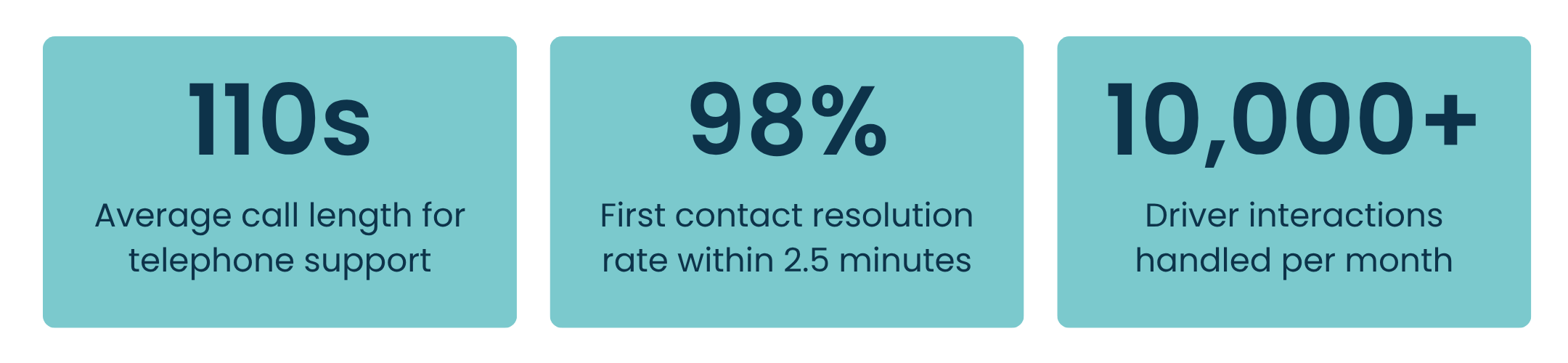 Key to our performance stats is our investment in the tools and knowledge systems that allow agents to act quickly and confidently without guesswork, without script-reading, and with the ability to tailor every interaction to the tone and priorities of the CPO they are representing.
Good driver support is a partnership rather than a product
The webinar highlighted a clear indication that the CPOs getting the most from driver support aren’t treating it as a compliance checkbox, they’re treating it as a partnership.
That means sharing detailed knowledge about their charge points, while giving their support provider the leeway to offer real resolutions in the moment such as promotions, discounts, future session credits as opposed to a holding message and a promise to follow up. It also means understanding that when something goes wrong at a charge point, that interaction is often the only time a driver will ever speak to anyone representing that CPO, so it has to count.
As the EV charging landscape becomes more competitive with more operators, and more choice for consumers, the quality of that experience during a failure moment will increasingly determine whether a driver comes back. Reliability and price matter, but how you handle problems when they arise may matter more.
 See how our Arnold Clark Charge partnership delivers exceptional driver support, click on the image above.
Where AI fits in, and where it doesn't (yet)
The role of AI in driver support is one of the most talked-about questions in the sector right now, and was covered in detail in the webinar. More than 80% of UK consumers still prefer to speak to a human when dealing with an urgent issue, and almost every call a stranded EV driver makes qualifies as urgent.
Our view is clear: AI and automation belong inside the operation, not in front of the driver. The real gains come from using these tools to surface the right information to agents instantly, reduce decision-making time, and identify network faults before a driver even picks up the phone. The goal is to eliminate the need for that call in the first place and where that is not possible, to make the human interaction that follows as fast and effective as it can be.
We aim to introduce automation directly into driver-facing experiences, but only when we can demonstrate it does not come at the cost of quality or customer satisfaction. A race to the bottom on cost is not a strategy we think is worth pursuing.
THe Data Dividend
There is one more dimension to driver support that is still undervalued across the industry: the data. Every interaction is a signal. At the volume we operate (over 100,000 interactions in the last twelve months), that data becomes a powerful lens on network performance, hardware reliability, payment provider behaviour, and customer satisfaction.
The CPOs who will pull ahead in the next phase of this industry are the ones who treat driver support not just as incident response, but as a real-time intelligence feed that shapes how their network grows and improves.
Find out more
Want to see how Fuuse delivers driver support, and what it could look like for your network? Get in touch with our team to arrange a conversation or a deeper dive into the data.