




The Association of Fleet Professionals (AFP) has published its 2026 Manifesto - a detailed set of proposals designed to accelerate fleet decarbonisation, simplify regulation, improve charging infrastructure, enhance safety, and strengthen workforce capability. The AFP represents over 1,900 members managing more than 250,000 vehicles across the UK.
We know that running a fleet is time-consuming, and manifestos of this nature can be lengthy, so we’ve picked out some of the key details to provide a quick reference guide.
1. Electric van adoption is getting easier
From 1 June 2026, 3.5-4.25 tonne electric vans now have full regulatory parity with their internal combustion engine (ICE) counterparts, covering MOT timing, drivers' hours rules, and licensing. This is a significant win for van fleets that's been years in the making.
2. WLTP range claims are misleading fleets
The AFP is pushing for an overhaul of EV labelling. Many electric vans are only achieving half of their stated Worldwide Harmonised Light Vehicle Test Procedure (WLTP) range in cold conditions with a full load. As a result, it’s easy for fleet managers to purchase vehicles that are not suited to their operational needs. Pressure on the government for a more realistic, condition-based rating system can be expected.
3. The AFP calls the new EV tax (eVED), 'the wrong tax at the wrong time'
Electric Vehicle Excise Duty (eVED) is due to launch in April 2028. The AFP manifesto argues it's the wrong tax at the wrong time, and is lobbying for a delay to 2030. Beyond the cost implications, the administrative burden (upfront payment with mileage-based adjustments) alone is inconvenient for fleet managers.
4. Charging reimbursement rules are still a grey area
Two Advisory Electric Rates now exist (home and public charging), but HMRC still hasn't published clear guidance on how to apply them. Many fleets are processing actual-cost reimbursements instead, which is complex when drivers charge at home, at work, and on public networks. There is a need for clearer rules.
5. Public charging VAT needs to match home charging
Home charging attracts 5% VAT. Public charging attracts 20%. The AFP wants these equalised, arguing the disparity unfairly penalises drivers who can't charge at home, if, for example, they don’t have a driveway. For fleet operators managing mixed-charging workforces, equal VAT charges would make a meaningful difference to running costs.

6. The UK needs a national kerbside charging strategy
Inconsistent local authority funding has led to a postcode lottery for on-street charging. The AFP is calling for a unified national programme. Without it, drivers that don't have driveways will continue to face real barriers to EV adoption, and fleet electrification will stall in certain areas.
7. A dedicated charge point regulator is on the table
The AFP is proposing a regulator to enforce pricing transparency, reliability standards, and seamless corporate billing across public charging networks. For fleets managing expense reporting and VAT recovery, this would be game-changing. Additionally, a regulator would be positioned to implement quality standards to make sure that the advertised output is delivered, reducing variability between sites.
8. The HMRC 'available to use' rule is holding back car clubs
Under current benefit in kind (BIK) rules, a company vehicle is taxable if it's simply accessible to an employee, even if unused for months. The AFP wants this modernised, including allowing vehicles to be used via car clubs at below-market rates without triggering a BIK charge. The AFP feels this is an ask that reflects how fleets actually operate today.
9. A new Road Safety Strategy targets a 65% reduction in fatalities by 2035
The government's Road Safety Strategy sets an ambitious target, with stricter drink-drive limits and tougher penalties for dangerous drivers. A National Work-Related Road Safety Charter will give fleet managers a framework to strengthen their duty of care obligations. The AFP is actively supporting the pilot phase.
10. Fleet skills and workforce development are getting investment
The AFP Fleet Academy is expanding its training programmes and has partnered with Futures for All to open up fleet careers to young people. A dedicated fleet Apprenticeship, the first of its kind in the UK, is in development.
Fleet 360 - Optimising your operations in a complex industry
The AFP Manifesto reflects an industry navigating complexity: decarbonisation targets, evolving tax rules, infrastructure gaps, and workforce pressures all at once. Staying on top of it all can be challenging. This is where having the right tools in place makes a difference.
Fleet 360 from Fuuse gives you total visibility of your EV fleet charging, wherever it happens. Powered by Fuuse’s comprehensive charge point management system (CPMS) it manages your owned infrastructure, while giving you access to all of your fleet's workplace, home and public charging sessions in a single platform.
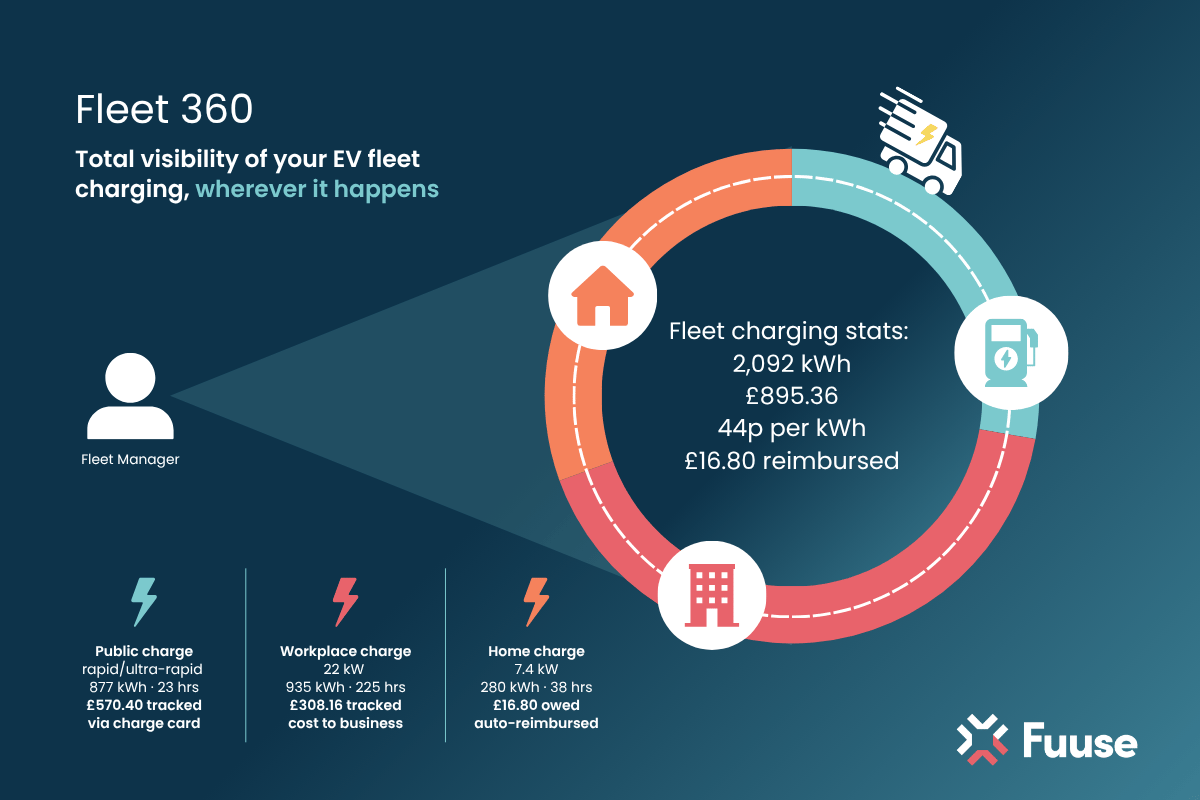
For fleet managers, Fleet 360 means fully informed decision-making with no need for time-consuming spreadsheet reconciliation or guesswork around AER. For drivers, it means a straightforward charging experience that never leaves them out of pocket.
Find out more about Fleet 360 here.
Ready to take control of your fleet charging?
Complete the form below and a member of our team will be in touch.