




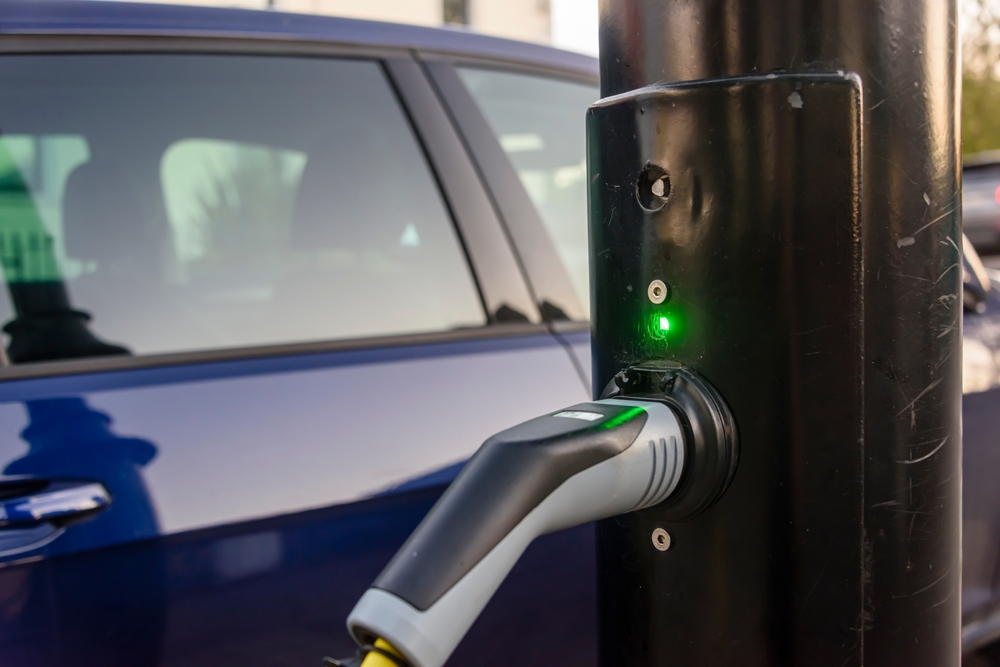
As EV adoption continues to grow, so does the need for accessible charging. Lamppost charging is one of the most practical ways to provide this access, invaluable for those without off-street parking and a useful charging option for visitors to the local area.
By making use of existing infrastructure, lamppost charging offers a relatively quick and affordable route to expanding public EV charging. It avoids disruption to communities such as road closures and congestion, and doesn’t require more street furniture to be added.
The hidden complexity behind lamppost charging
However, while lamppost charging can unlock EV charging access at scale, it can only do so if the associated software is certified to handle the accurate measurement of energy delivered from unmetered supplies, collect payments and distribute correctly. Behind the scenes of a seemingly straightforward, practical solution, there is some complexity at play.
Unlike traditional EV charge points installed solely for vehicle charging, lampposts (even when fitted with chargers), are not equipped to manage the full charging process from plug-in through to billing. The main challenge is that they often do not connect to a metered electricity supply. For billing to work correctly, energy usage must be accurately measured and settled, giving charge point operators (most often local authorities in this case) confidence in billing accuracy, compliance and auditability.
Why mCMS certification and Elexon approval are essential
The solution to unmetered supply lies in the charge point management system (CPMS) used to manage lamppost chargers. For a CPMS to be suitable, it must be certified as an mCMS (Measured Central Management System) and approved by Elexon.
The mCMS system is used to control and measure energy consumption for unmetered equipment in Great Britain, such as EV charge points installed on existing street furniture like lampposts. Elexon, which manages the Balancing and Settlement Code (BSC) for the British electricity wholesale market, coordinates the approval process for mCMS technology. Elexon approval is a legal requirement for CPMS platforms used on lamppost chargers and is what enables these projects to be rolled out and operated at scale.
Fuuse is the only UK based mCMS CPMS that is also OCPP certified
Demonstrating our commitment to compliance and accessible EV charging, and following a rigorous testing process, we’re pleased to confirm that Fuuse has been awarded mCMS certification with Elexon approval for managing lamppost chargers. This confirms that Fuuse software is capable of accurate event logging, precise metering, correct energy allocation and full regulatory compliance. In short, public bodies and installers can use Fuuse for lamppost charging projects with confidence.
What this means for local authorities
For local authorities applying for LEVI funding, or those that have already secured it, an Elexon-approved CPMS removes a major operational risk. Approved settlement, proven software and reduced compliance complexity make projects easier to approve, procure and deliver, enabling more public EV charging to be deployed for residents and businesses.
What this means for installers
For installers, an Elexon-approved CPMS significantly simplifies lamppost charging projects. It means less uncertainty during deployment, confidence in compliance from day one, faster local authority sign-off and fewer issues around billing and data after installation.
Supporting scalable, compliant on-street charging
Achieving mCMS certification with Elexon approval is an important milestone for Fuuse. It demonstrates our understanding of the real-world challenges of EV charging infrastructure and our commitment to supporting scalable, compliant public charging. We look forward to continuing to support local authorities and installers by investing in complex use cases such as lamppost charging and helping to scale on-street charging responsibly.
For more information on how Fuuse can support your EV charging infrastructure, complete the form below.